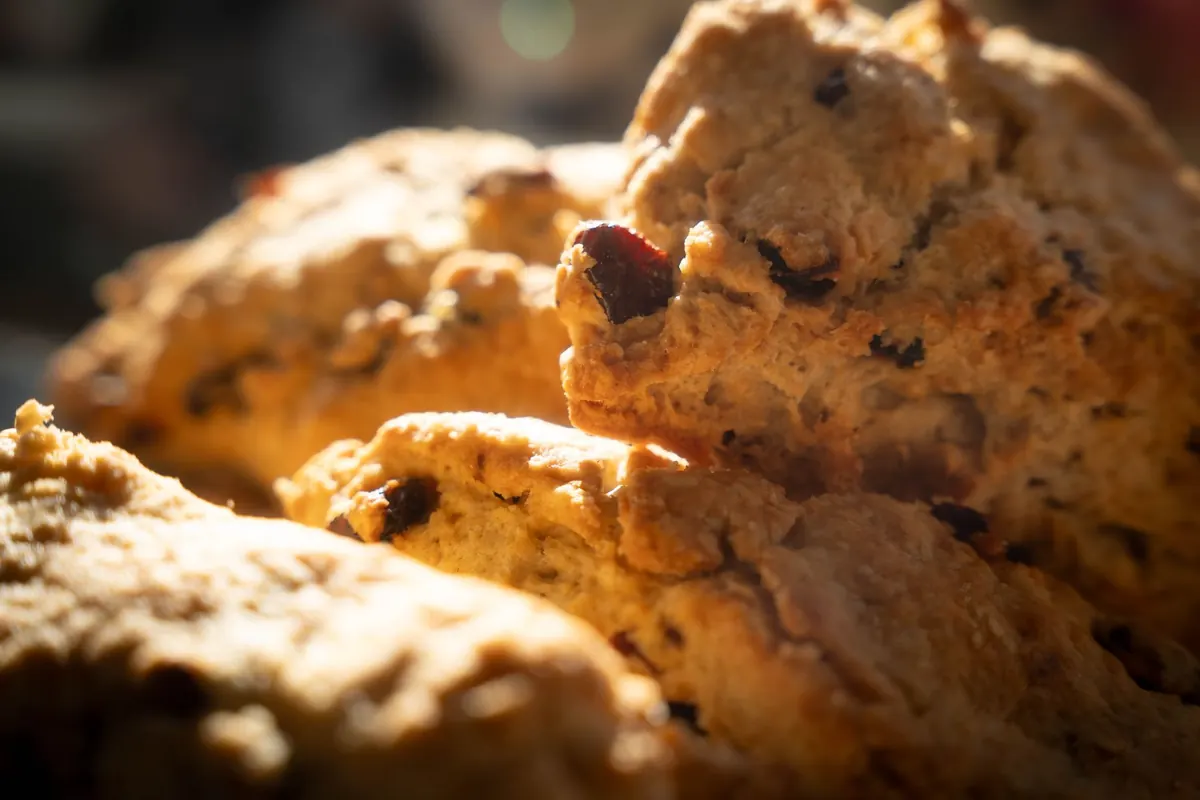
A scone arrives at the table split and still warm, and within thirty seconds somebody has reached for the cream while somebody else has reached for the butter. Both are dairy, both are pale yellow, both spread. Only one of them belongs on a cream tea scone, and everyone at the table knows which one. The trouble is that everyone at the table knows a different one.
Here is the short answer before the long one. Clotted cream is the traditional topping for a cream tea. Butter is the traditional topping for a scone in the ordinary, everyday sense — the Tuesday-afternoon sense, the one with jam and a mug of tea. They are not really competing. They answer two different questions, and most of the confusion comes from treating them as one.
Get the Terms Straight First
Words like "cream tea" and "scone" get thrown around loosely, so it helps to be precise about what is actually being compared.
- Clotted cream is a thick, cooked cream from the West Country, made by heating cream slowly and letting it cool so a dense golden crust forms on top. In the UK it is held to a minimum milk fat content of around 55 per cent, which is why it behaves nothing like whipped cream. It is spreadable but heavy — closer to soft butter than to anything you would spoon over a pudding.
- Butter is churned cream, roughly 80 per cent fat, salted or unsalted. It is also, in most scone recipes, already in the scone, rubbed into the flour before the milk goes in.
- Jam is the third element and the one that quietly decides the argument. Strawberry is the classic; raspberry has its loyalists.
- A cream tea is a specific thing: a scone, clotted cream, jam and a pot of tea. Not the full afternoon tea with finger sandwiches and cakes. Just the scone, done properly.
The Devon Method: Cream First
In Devon you split the scone, put on a generous spoonful of clotted cream, and add the jam on top. The cream goes down first as a kind of butter substitute, and the jam sits on it in a neat layer.
The logic is practical as well as traditional. Devon is the historic heartland of clotted cream production, and a thick layer of cream under the jam stops the jam soaking straight into the crumb. Spread jam directly onto a scone and it vanishes into the surface; put cream underneath and the jam has something to sit on.
The Cornish Method: Jam First
In Cornwall the order reverses. Jam goes onto the scone first, spread edge to edge like butter, and a dollop of clotted cream goes on top. Cornish cream teas often arrive with the cream in a small dish so you can add it yourself, and the result is a visible crown of cream rather than a smooth layer.
There is a texture argument here too. Cream smeared over jam stays in place; jam spread over cream tends to drag the cream across the scone in streaks. Cornish loyalists will tell you the jam is doing the job butter would do, so it should go on the bread, and the cream should be the treat on top. Both counties claim their method is the original one. Neither will concede, and the debate has been running long enough to become regional identity rather than a question anyone expects to settle. If you are eating in Devon, do it the Devon way. In Cornwall, do it the Cornish way. It costs you nothing and buys you a peaceful afternoon.
So Where Does Butter Fit?
Butter's claim is real, but it is a different claim. Every decent scone contains butter already. What people mean when they ask about butter on a scone is butter on top — and that is where the traditions part company.
Everyday scones versus cream teas
In most British homes, a scone with butter and jam is the default. It is quick, it uses what is in the fridge, and it is genuinely good. Nobody is doing anything wrong. But it is not a cream tea, in the same way that a cheese sandwich is not a ploughman's lunch. Once clotted cream is on the table, butter becomes largely redundant: cream is richer and thicker, and piling both onto one small scone gives you a slippery, overloaded mouthful where neither registers properly. Many people who grew up with cream teas would call butter on top an outright error.
The butter-under-cream compromise
A minority position, and not a criminal one: a thin scrape of salted butter on the scone before the cream. The salt sharpens the sweetness of the jam, and the fat layer helps if the scone sits for a few minutes before eating. Use salted butter if you are going to do it — unsalted butter under clotted cream adds nothing you could detect. Savoury scones are a separate case entirely. A cheese scone wants butter, and clotted cream has no business anywhere near it.
The Verdict
If the question is which is traditional on a cream tea scone, the answer is clotted cream. Full stop, no hedging, in both Devon and Cornwall — the counties disagree only about the order. Butter is traditional on a scone as an everyday thing, with jam, at home, without ceremony.
What butter is not is a substitute. If you cannot get clotted cream, a good softened butter with jam makes a better scone than a tub of something pretending to be cream. Squirty cream or a low-fat spread will let the side down. Do the simple version well instead.
Building the Scone Properly
- Start plain. For a cream tea, use a plain or lightly fruited scone. Cheese, chive and cherry scones are excellent and entirely wrong here.
- Warm, not hot. A scone straight from the oven melts the cream into a puddle. Let it sit for a few minutes.
- Split with your hands if you can. The rough, crumbly surface holds cream and jam better than a flat knife-cut. A knife is fine — just do not press the scone flat while cutting.
- Keep the layers modest. A heaped teaspoon of cream and a level teaspoon of jam is right for a standard scone. A tower of cream looks impressive and is miserable to eat.
- Work quickly. Assemble and eat. A loaded scone left standing for ten minutes is a soggy scone.
- Serve strong tea. English breakfast or a good Assam. Milk in first is a separate fight for a separate day.
Practical Notes for Your Own Tea Table
If you are hosting and would rather not referee, put everything out and let people build their own: clotted cream, softened salted butter, two jams, and a stack of split scones. Someone will go cream-first, someone jam-first, someone will add butter, and the table will be happier for it. The tradition matters most when you are standing in the county it belongs to.
Buy clotted cream from the chiller, look for the crust on top, and let it stand at room temperature for fifteen or twenty minutes before serving — cold clotted cream tears a scone apart instead of spreading. Leftovers keep in the fridge and are excellent stirred through scrambled eggs or spooned over berries. Do not freeze it.
One sensible note: cream, butter and jam are rich foods best enjoyed as an occasional treat rather than a daily habit. If you are managing a health condition that affects what you eat, take advice from a qualified professional rather than a website about scones.
Photo: James Collington / Pexels