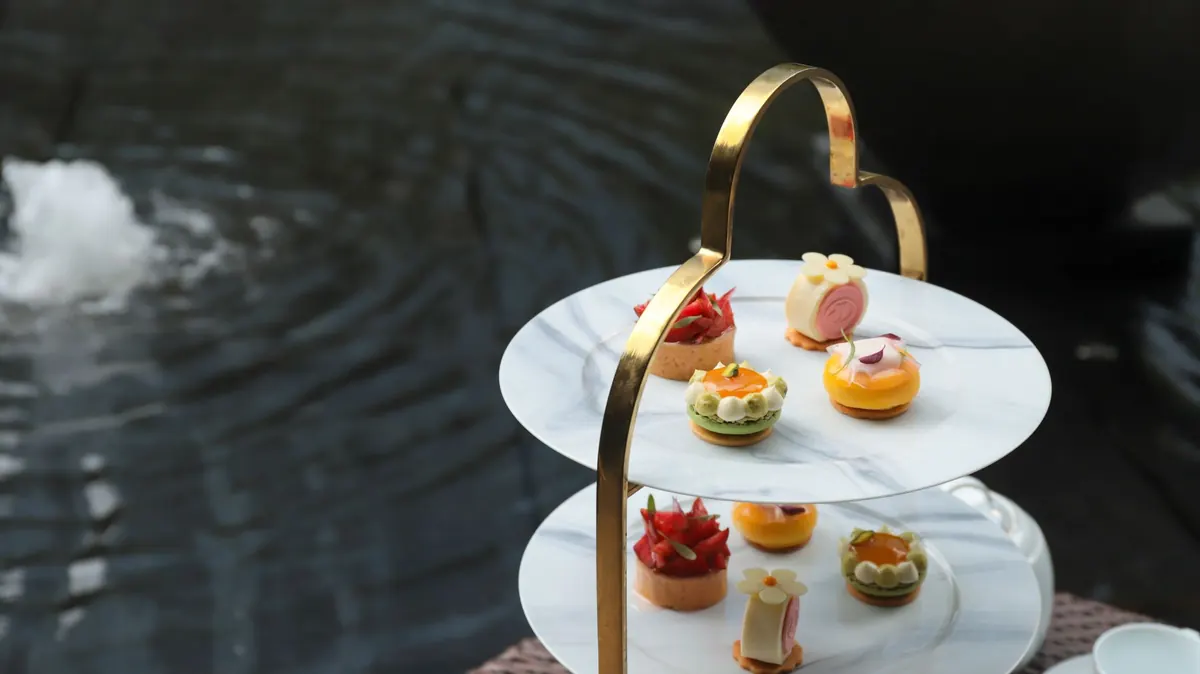
Afternoon tea is not a buffet, and it is not a snack. It is a sequence, and the sequence is most of the pleasure. Get the order wrong and you end up too full for the scones, which is a small tragedy you have inflicted on yourself. Get it right and the whole thing unfolds at a gentle pace: savoury, then warm, then sweet, with tea running underneath the entire performance like a bass line.
One clarification before we start, since it trips up plenty of visitors. Afternoon tea is the elegant middle-of-the-afternoon affair — sandwiches, scones, small cakes, a pot of tea. High tea is a different animal altogether: a working supper of something hot, eaten at a proper table around six o'clock. If you are planning a birthday treat or a quiet Sunday, you mean afternoon tea.
The Order Is the Whole Point
Three courses, eaten in a fixed order, for reasons that are practical rather than ceremonial. Sandwiches come first because they are the least sweet and the most substantial, and because they settle a hunger that would otherwise make you wolf the cake. Scones follow while the palate is still reasonably clean, since clotted cream and jam need room to be tasted properly. Sweets come last because sugar dulls everything after it — eat the Battenberg first and your cucumber sandwich will taste of nothing at all.
That is the theory. In practice, the order also solves a hosting problem. Each course has its own preparation moment, so you are never trying to warm scones and assemble sandwiches at the same time.
Set the Table Before You Think About Food
Lay everything out first, because once the sandwiches are made you will not want to go hunting for a strainer. A three-tier stand is traditional, with savouries on the bottom, scones in the middle and sweets on top; guests take from the bottom up, which neatly enforces the correct order without anyone having to say so. If you do not own a stand, three plates in the middle of the table work perfectly well.
- A teapot, plus a second one if you are brewing a different tea
- Cups and saucers, or mugs if that is your house style — nobody is marking you
- A small strainer, if you are using loose leaf
- Side plates and small knives, one set per guest
- Jam and clotted cream in separate pots, each with its own spoon
- Napkins, ideally cloth
- A jug of milk and a bowl of sugar, or a slice of lemon
Take the clotted cream out of the fridge twenty minutes ahead. Cold cream tears a scone apart.
Course One: Sandwiches, Cut Thin and Eaten First
The classic afternoon tea sandwich is thin, crustless, and small enough to eat in two bites without negotiation. Butter both slices of bread before you add the filling — it is not indulgence, it is waterproofing, and it stops a cucumber sandwich turning to paste within twenty minutes.
Fillings that behave
Cucumber, salted and patted dry so it does not weep. Smoked salmon with cream cheese and a little dill. Egg mayonnaise with cress. Ham with a scrape of mustard. Coronation chicken, if you want something with a bit of a kick. Avoid anything wet, chunky or overloaded; a sandwich that collapses is a sandwich that has failed.
Timing and storage
Make them an hour or two ahead, arrange them on a tray, and cover with a barely damp tea towel rather than cling film, which sweats. Keep them out of the fridge if you can — fridge-cold bread tastes of nothing. Bring them to the table first, and let people take two or three at a time rather than filling a plate.
Course Two: Scones, Warm and Split by Hand
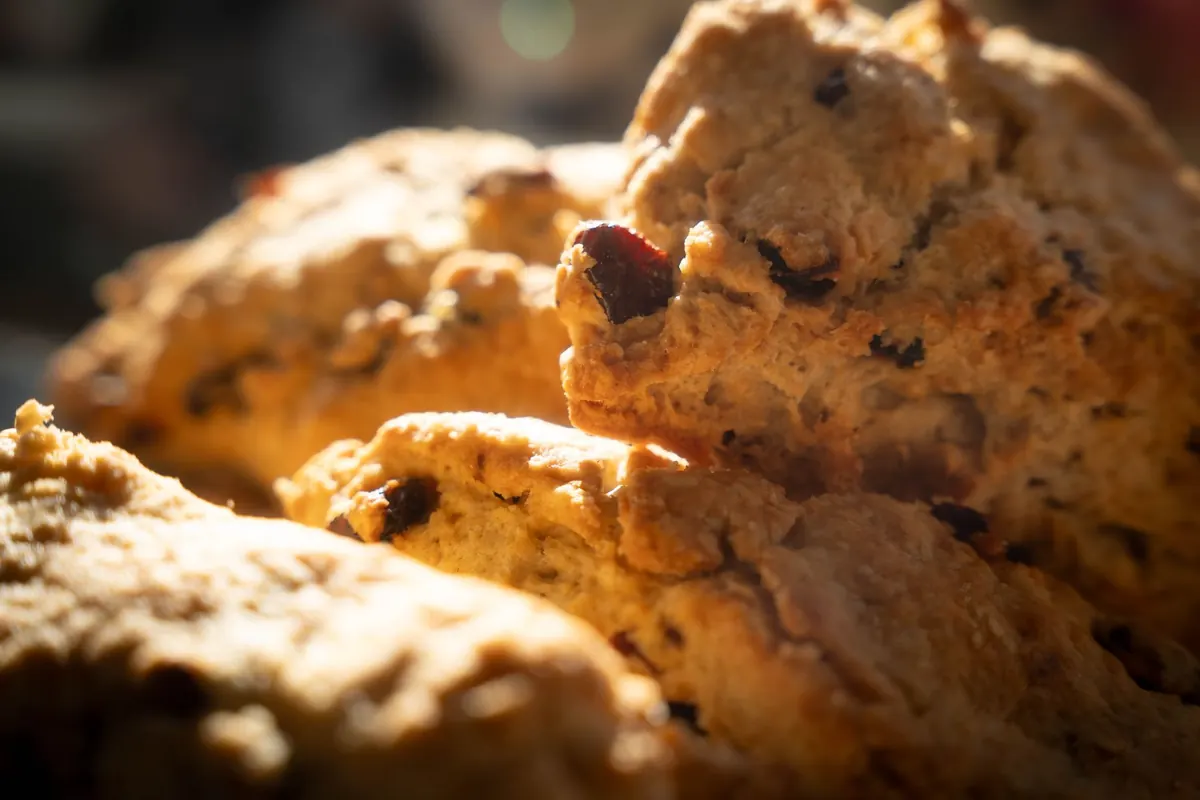
Scones should be warm, not hot, and they should be split rather than sliced. Press your thumbs into the side and ease the two halves apart; a knife compresses the crumb and turns a light scone into something bouncy. Eat each half as you go rather than assembling a double-decker, and yes, this is finger food. Napkins exist for exactly this reason.
Now, the argument. Cornwall puts jam on first, then cream. Devon puts cream on first, then jam. Both counties are adamant and neither is going to concede. At your own table, choose one and stop apologising for it. What matters far more is the quality of the two things you are spreading: proper clotted cream and a good raspberry or strawberry jam, both at room temperature.
One scone each is generous. Two is a decision you may regret by the time the cakes arrive.
Course Three: Sweets, Quietly Small
The final tier is not a dessert course. Portion size collapses here for good reason: everything should be two bites at most. A finger of Battenberg, a small fruit tart, half a mini Victoria sponge, a lemon drizzle square, a chocolate éclair, a macaron. Anything with fresh cream should be eaten first, before it sits and softens.
Serve them on the top tier and let people help themselves, or pass a single plate around. A fork is acceptable for anything sticky or cream-filled; everything else is fingers.
Keep the Tea Coming
The tea is not a garnish. It cuts through the butter and the sugar and keeps the whole thing moving, which means it needs refreshing about once per course.
For sandwiches, an Assam or an English Breakfast — malty, brisk, and forgiving of milk. With scones, the same pot will do. As the sweets arrive, switch to something lighter: an Earl Grey, a Darjeeling, or a green tea if you fancy it. Use water just off the boil, brew for three to four minutes, and then get the leaves out of the pot. Overbrewed tea is bitter and no amount of milk rescues it.
On milk: pouring it into the cup before the tea is the older habit and it mixes more evenly, so it is a sensible method when pouring from a pot. Pouring it in afterwards is what most people do now. Either is fine. Offering lemon and milk at the same time to the same guest is not.
A Serving Order to Work From
If you only remember one thing, remember this running order. It keeps the table calm and the host out of the kitchen.
- Brew the first pot and pour as guests sit down.
- Bring out the sandwiches and let people take a few each.
- Clear the sandwich plates, then refresh the tea and bring the scones, jam and cream together.
- Clear again, brew a lighter tea, and set out the sweets.
- Keep the pot going until people start declining it, which is the signal that tea is over.
All told, allow an hour and a half. Any faster and it becomes a meal rather than an occasion. Any slower and the scones go cold, which is the one thing in this whole business that genuinely cannot be fixed.
Photo: Change C.C / Pexels