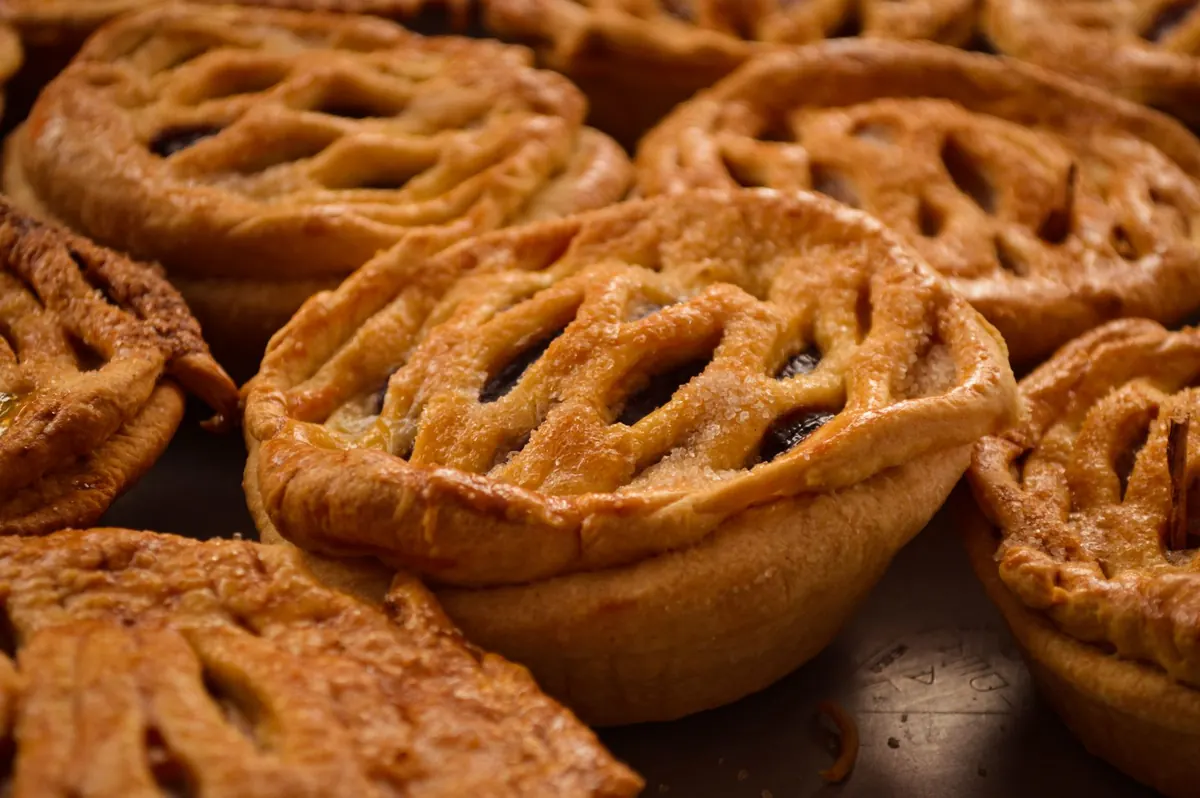
Ask someone outside Britain to name a British food and pie comes up quickly, though they usually mean something sweet. The savoury pie is the one worth learning. It is a complete meal wrapped in its own container, sturdy enough to carry to work or a football match, and it has been doing that job for centuries.
Below is a tour of the main types, the pastry behind each one, and the small decisions — seasoning, crimping, resting — that separate a good pie from a disappointing one.
The Pastry Styles That Matter
Almost every British savoury pie is built on one of four pastries, and you only need two of them to get started.
Shortcrust is the workhorse. Rub cold fat into plain flour — roughly half the weight of fat to flour — until it looks like coarse breadcrumbs, then bring it together with iced water and let it rest. Half butter, half lard is a good split: butter for flavour, lard for shortness. This is the pastry for steak pies and most double-crust pies.
Hot water crust has the opposite temperament. You melt lard with water, pour it into flour, and work the dough while it is still warm and pliable. It can be raised by hand against the side of a jar or pressed into a straight-sided tin, and it sets firm and crisp. Pork pies live here.
Rough puff is folded rather than rubbed: butter is rolled into the dough in visible flecks, then the block is folded and turned a few times. Flaky and buttery, ideal for pasties and hand pies.
Suet crust, made with shredded beef suet, belongs to boiled and baked puddings, clangers and roly-polys — softer and heavier, and very good with gravy.
The Cornish Pasty: A Meal You Can Carry
If you take one thing from this guide, take the pasty. It teaches you proportion. The classic filling is beef skirt, waxy potato, swede and onion, all diced small and evenly, seasoned generously, and put into the pastry raw. No gravy, no pre-cooking. The juices that come out of the meat and vegetables steam everything from the inside, which is why even dicing matters: a chunk of potato twice the size of its neighbours will still be hard when the beef is done.
The Cornish pasty holds protected status, and while people argue about carrot with considerable feeling, the traditional version is beef, potato, swede and onion, and plenty of pepper.
The Crimp
Roll a circle of rough puff, fill one half, brush the rim with egg wash, fold over and press. Then crimp along the side, not across the top. Work from one end, folding the edge over itself in small overlapping pleats, pinching as you go. The rope of folded pastry is what keeps the seam shut when the filling expands. A top crimp looks neat in photographs but is not the traditional shape.
Bake hot — around 200°C — for fifteen minutes to set the crust, then drop to 180°C for another thirty-five to forty minutes. Let them sit for ten minutes before eating. A pasty straight from the oven is molten in the middle.
The Pork Pie: Cold, Jellied, and Worth the Effort
Pork pies are the test of a cook's nerve, because you make them hot, fill them, bake them, and then pour liquid into a hole in the lid once they have cooled. That liquid is the jelly, and it is what makes the pie.
For the filling, coarsely chop or mince pork shoulder, season firmly with salt, white pepper and sage, and add a little mace if you have it. Raise the hot water crust around a straight-sided tin or a small jar, pack the meat in, cap with a lid, seal, and cut a small steam hole in the centre. Bake, then cool completely.
For the jelly, simmer pork bones or a ham hock down to a strong stock, or use a good chicken stock set with gelatine. Pour it, warm and liquid, through the steam hole in two or three goes, letting it settle between each. Leave the pie overnight in the fridge and the jelly sets into the gaps left by the shrinking meat. Melton Mowbray pies are the famous example, and they carry protected status too.
The Wider Family
Once you can handle pastry, the variations come quickly. A short list worth working through:
- Steak and kidney pie — beef chuck and kidney, browned hard, then braised slowly in ale until tender, with a suet or shortcrust lid.
- Steak and ale — the same idea without the kidney, using stout for a darker, slightly bitter gravy.
- Chicken and mushroom — a white sauce or cream base, thyme, and puff pastry for the lid.
- Scotch pie — a double-crust mutton pie baked in a straight-sided tin, often eaten with beans or chips.
- Forfar bridie — minced beef and onion, no potato, and a little suet to keep it moist.
- Bedfordshire clanger — a suet crust with savoury filling at one end and jam at the other.
- Homity pie — an open tart of potato, leek and cheese, allium-heavy and forgiving.
- Fidget pie — bacon, apple and potato, sweet and salty together.
Fillings, Seasoning and Soggy Bottoms
Most pie failures come down to moisture and seasoning, in that order.
Season the filling more boldly than you would a stew. Cold pastry mutes flavour, and a pie eaten at room temperature needs more salt than one eaten hot. To check, fry a spoonful of the raw filling in a pan and taste it — never taste raw pork or beef straight from the bowl.
Let cooked fillings cool completely before they go near pastry. Warm filling melts the fat and turns the base to paste. If your filling is watery, thicken it with a little flour or cornflour while it cooks, or drain off some liquid and reduce it separately, then stir it back in.
Always leave a small vent in a double-crust pie. Steam needs somewhere to go, and an egg-washed lid with a couple of slits will come out glossy rather than split.
An Order of Work for Your First Pie
- Make the pastry first, wrap it, and chill it while you deal with the filling.
- Cook and cool the filling fully — a fridge-cold filling is a cook's best friend.
- Roll, fill, seal and crimp, keeping the pastry you are not working with under a cloth.
- Chill the assembled pie for fifteen to twenty minutes; it holds its shape far better in the oven.
- Bake hot first, then lower the heat, and cover the crust with foil if it browns too fast.
- Rest for ten minutes before cutting, or fifteen for a pork pie from the fridge.
Unbaked pasties and pies freeze well; bake them from frozen, adding ten minutes. Reheat leftovers in the oven rather than the microwave if you want the crust back. Cool anything containing meat quickly, refrigerate it promptly, and reheat until piping hot.
Start Simple, Then Raise Your Game
Make four pasties before you attempt anything raised. They are forgiving, they teach you how the pastry behaves when it is warm, and the worst outcome is still lunch. When your crimps hold and your bases are dry, try a hand-raised pork pie — it will take an afternoon, the jelly will probably leak once, and the second one will be excellent.
That is the whole trick with British pies. They are ordinary food made carefully, and the care shows in the crust.